
Search Onslow Voter Registration
The North Carolina State Board of Elections Voter Search is the direct lookup for an Onslow County registration. Enter both required name fields first. A middle initial and birth year can separate people with similar names, while the county filter keeps the results focused on Onslow. The tool is free and open to the public.
Choose Registered for a current record. If that search returns no match, try Removed or Denied. A county move, a status change, a spelling variation, or an address-protection measure can alter what appears. The result is a record of registration and election participation, not a general identity profile.
| Search entry | Control | Needed | How to use it |
|---|---|---|---|
| First Name | Text | Yes | Enter the given name. |
| Middle Initial | Text | No | Use one initial to narrow a common name. |
| Last Name | Text | Yes | Enter the surname. |
| Year of Birth | Dropdown | No | Select a year, not a full birth date. |
| County | Dropdown | No | Select Onslow for a county-focused result. |
| Voter Status | Checkboxes | At least one | Choose Registered, Removed or Denied. |
Use Search to submit the fields or Reset to clear them. A failed current-status search does not prove that the person was never registered. Repeat the search with the second status choice before turning to the county office.
Note: Try Removed or Denied before treating a failed Registered search as proof that no Onslow voter record exists.
Read Onslow Voter Record Fields
A matching detail page can identify the voter, registration county, status, party, registration date, precinct, and assigned districts. A residence address may appear unless it is protected. Depending on the voter and election, the page can also link to a polling place, sample ballot, absentee status that is legally available, and participation history.
District assignments are unusually detailed. They may include municipality or ward, congressional and legislative seats, judicial and prosecutorial districts, county commissioner and township areas, school districts, and fire, water, sewer, sanitation, rescue, or voter tabulation districts. These fields help explain which contests belong on a ballot.
| Identity | Name, county registration identity, and status |
|---|---|
| Registration | Party, registration date, precinct, and county |
| Address | Residence when public; protected addresses are withheld |
| Districts | Federal, state, court, county, municipal, school, and service areas |
| Election tools | Polling place, sample ballot, and available absentee information |
| Voter history | Election and voting method, never a ballot selection |
Birth year is not the same as a full date of birth. The public file layout may also give age at year end, but it does not publish the full birth date. That distinction matters when checking two people with the same name.
Onslow Voter Privacy Boundaries
North Carolina draws a field-by-field line between an open voter roll and confidential source data. G.S. 163-82.10 allows any person to request county or precinct lists selected by such traits as party, gender, race, registration date, precinct, districts, and voter history. It does not turn every item from the application into a public record.
Public electronic data can include a name, registration number, residence and mailing information, sex, race, age, party, precinct and district assignments, and history. Driver-license and Social Security fields in the downloadable layout show only whether qualifying information was supplied, not the number itself.
Confidential under G.S. 163-82.10. Social Security numbers, full dates of birth, registration agency, specified email data, voter-ID photos or copies, driver-license numbers, and protected addresses are withheld. A signature may be viewed but not copied or traced except for election administration.
Download Onslow Voter Records
The state publishes Onslow County as county 67 in a free file named ncvoter67.zip. It is a tab-delimited ZIP, refreshed on a weekly Sunday cycle. There is no ordinary request form, eligibility affidavit, or fee to obtain it. The acquisition path is a direct download, not a custom county list order.
Open the state voter registration data page to review the current data notes and download options. Its live screen is shown here because it is the official source for the Onslow voter file.
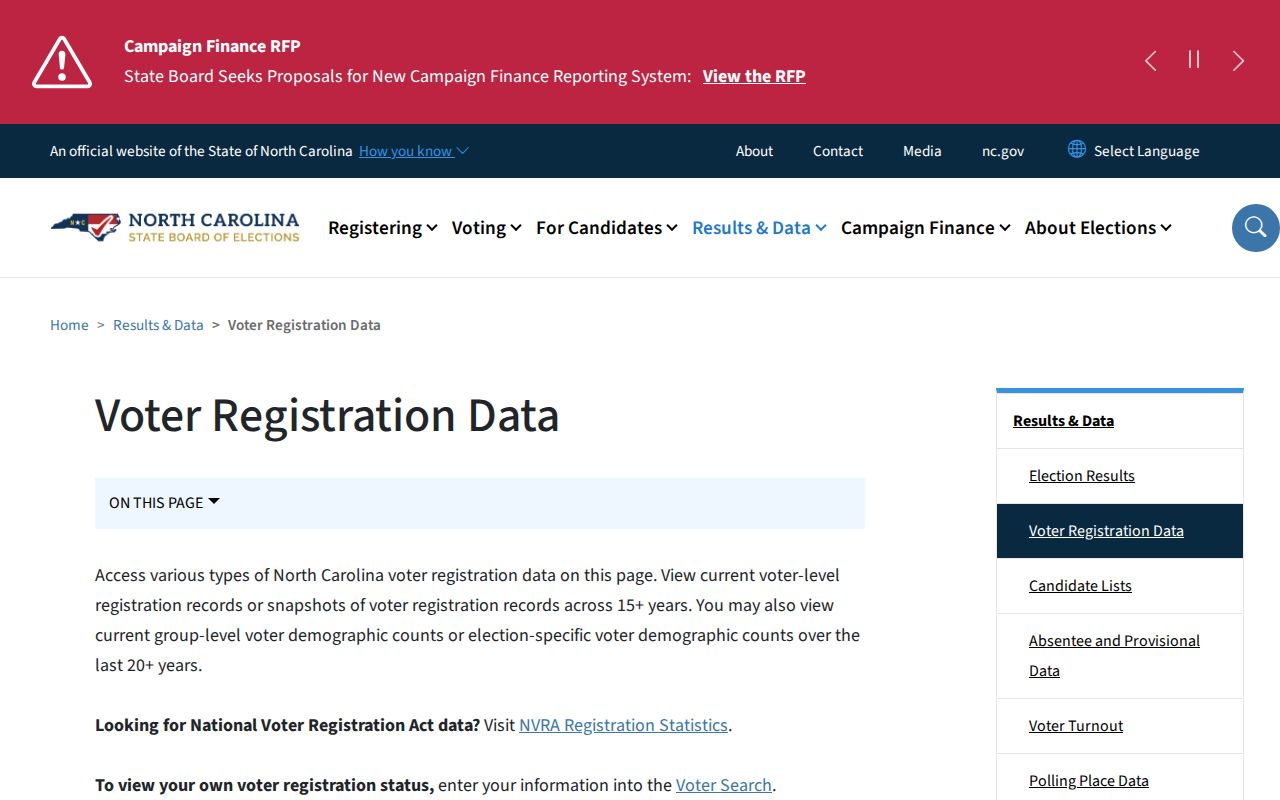
The captured state page points to current registration files and layouts, which should be checked each time rather than relying on an old saved format.
- Download ncvoter67.zip from the state file host.
- Consult the state layout, then open the tab-delimited data with software that preserves text fields and leading characters.
- Check the weekly update date before treating a status or address as current.
The layout carries county and state IDs, name parts, status and reason codes, address lines, phone, demographic fields, birth year, registration date, precinct, and many district codes. It can display a confidentiality indicator. A # in a name or xx/xx/xxxx in a registration date signals county-review masking rather than a normal value.
Onslow Participation Is Not Choice
Voter history reports that a person took part in an election and identifies the method used. It never discloses which candidate or measure received that voter’s choice. Ballot secrecy remains intact even when participation history is public.
The state voter history files cover the past ten years at voter level. They include registration number or NCID, party, county, precinct, election, and method, but omit names and demographic fields. NCID connects history to a registration record. For Onslow participation, filter statewide history by the county where the vote was cast. A current-county file can miss a person who later moved.
Can participation prove how someone voted? No. It proves only that an election event was recorded for that voter and may state the voting method. Any claim about a ballot choice goes beyond the public record.
Note: State aggregate history reaches further back, but aggregate counts cannot be used as a named voter’s personal participation record.
Protected Onslow Voter Addresses
A qualifying protective order or a current Address Confidentiality Program card, paired with a signed safety statement, can support address protection in election records. The North Carolina Address Confidentiality Program gives eligible relocated survivors of domestic violence, sexual assault, stalking, or trafficking a substitute address and mail-forwarding service.
Program membership alone does not finish voter-record suppression. The voter must submit the card and statement to Elections. The person’s name, precinct, and other nonprotected fields may remain public, so a missing street address should not be read as a missing registration. Past records are not erased merely because a substitute address is now in use.
Note: Address protection can hide a street while leaving the voter’s name, precinct, and other lawful public fields visible.
Why Onslow Registrations Change Status
G.S. 163-82.14 controls voter-list maintenance. Nonvoting by itself does not cause immediate cancellation. Address-confirmation work can shift a registration to inactive status, and the federal process generally calls for confirmation plus no participation through two federal general-election cycles before removal for a suspected move.
A Removed or Denied result is not proof of fraud or any other wrong. It can reflect a move, an incomplete or denied application, record maintenance, or another administrative event. Removed voters also leave the downloadable current file when their last-voted date is more than ten years old. Use the lookup’s second status choice, then ask Elections to explain a record when the status code is unclear.
Note: North Carolina does not cancel a registration at once merely because the voter missed one or more elections.
Live registration statistics can be filtered by county, report date, affiliation, race, gender, and active or inactive status. Counts change with the update cycle, so a dated snapshot should not be described as a permanent Onslow total or as election turnout.
Onslow Elections Office Access
The Onslow County Board of Elections is the local fallback when the public search gives an uncertain result, a protected record needs proper handling, or a current status requires an official explanation. The office is at 246 Georgetown Road in Jacksonville. It can be reached at 910-455-4484, by fax at 910-455-1390, or at onslowboe@onslowcountync.gov on weekdays from 8 a.m. to 5 p.m.
The county Board of Elections page shows the local office and its election services.
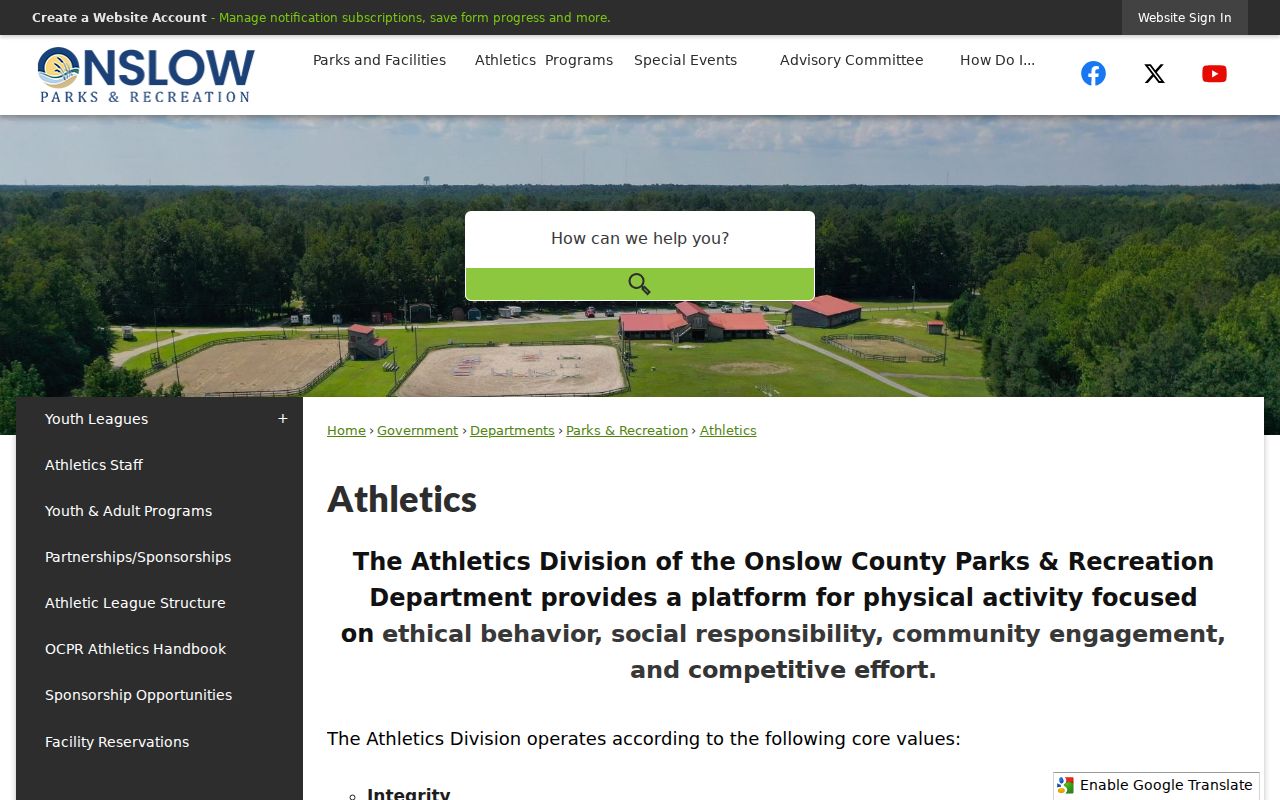
The county page provides the right local route for registration questions, while the state tools remain the main public lookup and bulk-data channels.
North Carolina’s broader open-record rules need not be rebuilt for a routine voter search. General custodian and request principles are covered with Onslow County public records access, while election-specific fields and limits come from Chapter 163.
Historical Onslow Voter Records
No verified source fixes the exact surviving years for Onslow County poll books or old registration registers. Begin with the Board of Elections and ask which historical series it retains, how each series is described, and whether public inspection is available. If the material has transferred, consult the State Archives catalog and county record holdings.
This fallback avoids two common errors. A modern weekly ZIP does not stand in for a historic poll book, and a lack of online search does not prove that no paper or archival record survives. Give the election year, precinct or township, voter name, and any known address when asking staff to identify a series. Do not claim a coverage date until the custodian or finding aid confirms it.
Lawful Use of Onslow Rolls
North Carolina does not impose a verified broad commercial-use ban on ordinary public voter data. That does not permit stalking, threats, fraud, identity theft, or harassment. Public access is a civic record rule, not permission to harm a voter. G.S. 14-277.3A can punish a repeated willful course of conduct that lacks a legal purpose and foreseeably causes fear for safety or substantial emotional distress.
Do not copy or trace voter signatures. Do not try to defeat an address-protection measure, and never present participation history as proof of a ballot choice. For context, the North Carolina SBI registry is a separate public system with its own warnings and is not part of an Onslow voter file.
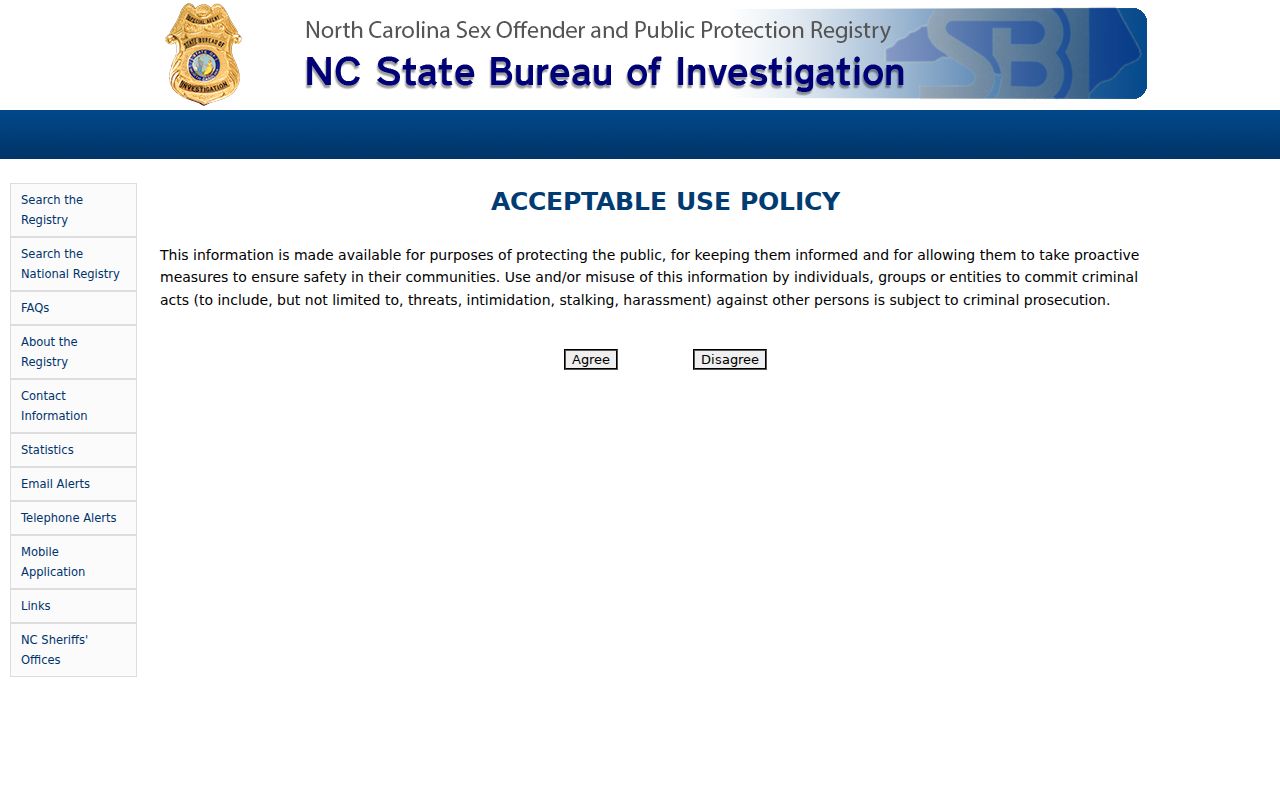
The separate registry screen reinforces a key boundary: each official database has its own purpose and use terms, and facts from one system should never be attributed to another.
Use the record lawfully. Check status, districts, and participation for civic or personal research. Never use voter registration data to stalk, harass, threaten, defraud, or expose a protected person.